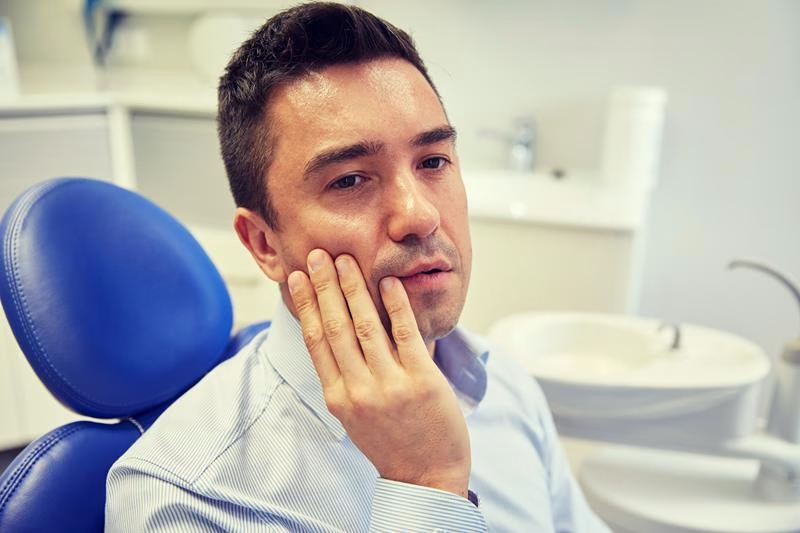
Severe tooth pain can make it difficult to eat, sleep, work, or focus. If decay or bacteria reaches the inner pulp of your tooth, a root canal may be needed to relieve pain and save your natural tooth.
At Financial District Dentistry, we provide root canals in San Francisco for patients with tooth infections, deep decay, swelling, dental abscesses, cracked teeth, and lingering tooth sensitivity. Our current root canals page explains that root canals are needed when decay and bacteria spread into the pulp inside the tooth, which contains nerves and can cause significant pain.
Financial District Dentistry
220 Montgomery St. Suite 120
San Francisco, CA 94104
Phone: (415) 399-9999
Our office is located in downtown San Francisco and serves patients throughout the Financial District, SoMa, Embarcadero, Union Square, Chinatown, Nob Hill, North Beach, Mission Bay, and surrounding communities.
What Is a Root Canal?
A root canal is a tooth-saving dental treatment that removes infected or inflamed pulp from inside the tooth. The root canals are then cleaned, disinfected, shaped, filled, and sealed to help prevent reinfection.
The American Association of Endodontists explains that patients typically need root canal treatment when there is inflammation or infection in the roots of a tooth, and that treatment involves removing the pulp, cleaning and shaping the canals, and sealing the space.
A root canal may help:
-
Relieve severe tooth pain
-
Remove infected or inflamed pulp
-
Save your natural tooth
-
Treat deep decay or dental infection
-
Reduce swelling caused by an infected tooth
-
Prevent infection from spreading
-
Restore chewing comfort
-
Avoid extraction when the tooth can be saved
A root canal is not designed to cause pain. It is designed to remove the source of pain and preserve your tooth.
Signs You May Need a Root Canal
Because the infection happens inside the tooth, you may not always see visible damage. Financial District Dentistry’s root canals page notes that patients may feel the problem through pain or notice signs such as bleeding, swelling, and bad breath.
Call a dentist if you notice:
| Symptom | Why It Matters |
|---|---|
| Severe toothache | May indicate infected or inflamed pulp |
| Lingering hot or cold sensitivity | Can signal nerve irritation or pulp damage |
| Pain when biting or chewing | May point to infection, fracture, or inflammation |
| Swollen gums | May suggest infection around the tooth root |
| Pimple-like bump on the gums | Could be a draining abscess |
| Bad taste or odor | May be linked to infection or drainage |
| Darkened tooth | Can occur after trauma or pulp damage |
| Cracked or broken tooth | Bacteria may reach the inner tooth |
| Facial or jaw swelling | Infection may be spreading |
Cleveland Clinic lists common root canal symptoms such as a pimple on the gums, swollen jaw, darkened tooth color, loose tooth, pain that spreads to the jaw or nearby teeth, pain when chewing, and swollen gums.
Why Root Canal Treatment Should Not Be Delayed
An infected tooth usually will not heal on its own. Pain may come and go, but bacteria can remain inside the tooth and continue damaging the root, bone, and surrounding tissues.
Delaying root canal treatment may lead to:
-
Worsening pain
-
Dental abscess
-
Facial or jaw swelling
-
Bone loss around the tooth
-
Tooth loss
-
Emergency dental treatment
-
Need for extraction and tooth replacement
Cleveland Clinic describes a tooth abscess as a pocket of pus from bacterial infection that can spread to surrounding bone and neighboring teeth.
Root Canal vs. Tooth Extraction
Whenever possible, saving your natural tooth is often the preferred option. A root canal removes infection while keeping the tooth in place. Extraction removes the tooth completely, which may require replacement with a dental implant, bridge, or denture.
| Treatment | Main Goal | Best For |
|---|---|---|
| Root canal | Save the natural tooth | Infected tooth that can still be restored |
| Extraction | Remove the tooth | Tooth too damaged to save |
| Dental implant | Replace a missing tooth root | Tooth replacement after extraction |
| Dental bridge | Replace a missing tooth | Fixed replacement when nearby teeth can support it |
The American Association of Endodontists describes root canal treatment as a procedure to relieve dental pain and save teeth.
What Causes a Tooth to Need a Root Canal?
Root canals are often needed when bacteria reach the inner pulp of the tooth.
Common causes include:
-
Untreated cavities
-
Deep decay
-
Cracked teeth
-
Broken teeth
-
Dental trauma
-
Large old fillings
-
Leaking crowns or fillings
-
Repeated dental procedures on the same tooth
-
Severe tooth wear
-
Infection beneath an old restoration
A dental exam and X-rays help determine whether the tooth can be treated with a root canal or whether another treatment is needed.
What to Expect During a Root Canal
1. Dental Exam and X-Rays
Your dentist examines the tooth, reviews your symptoms, and may take digital X-rays to evaluate the root, bone, and infection.
2. Local Anesthetic
The tooth and surrounding area are numbed so treatment is comfortable.
3. Removing the Infected Pulp
A small opening is made in the tooth so the damaged pulp can be removed from the pulp chamber and root canals.
4. Cleaning and Disinfecting
The canals are carefully cleaned, disinfected, and shaped. The American Association of Endodontists explains that root canal treatment is designed to eliminate bacteria, prevent reinfection, and save the natural tooth.
5. Filling and Sealing
The canals are filled and sealed to protect the tooth from future infection.
6. Final Restoration
After root canal therapy, the tooth often needs a crown or another restoration to protect it and restore full function. The American Association of Endodontists notes that after root canal treatment, patients return to their dentist for a crown or other restoration to protect and restore the tooth.
Does a Root Canal Hurt?
Modern root canal treatment is designed to relieve pain. The tooth is numbed before treatment, and most patients feel pressure rather than sharp pain.
After treatment, mild soreness or tenderness may occur for a few days, especially if the tooth was painful or infected beforehand. This usually improves as inflammation decreases.
Emergency Root Canal in San Francisco
Some root canal symptoms need urgent attention. Financial District Dentistry offers dental care from its downtown San Francisco office and does its best to accommodate busy schedules.
Call promptly if you have:
-
Severe toothache
-
Swelling in the gums, face, or jaw
-
Pain that wakes you at night
-
A broken tooth with pain
-
Pus or bad taste near a tooth
-
Fever with dental pain
-
Pain when biting
-
A pimple-like bump on the gums
Seek emergency medical care if you have trouble breathing, trouble swallowing, uncontrolled bleeding, or rapidly spreading facial swelling.
Root Canal Recovery and Aftercare
Most patients return to normal activities soon after root canal treatment. The tooth may feel tender for a short time, especially when biting.
After your root canal:
-
Avoid chewing on the treated tooth until the final restoration is placed.
-
Take medications only as directed.
-
Brush and floss normally unless told otherwise.
-
Avoid hard or sticky foods if you have a temporary filling or crown.
-
Schedule your crown or final restoration promptly if recommended.
-
Call the office if pain, swelling, or pressure worsens.
A root canal-treated tooth can continue functioning like a natural tooth once properly restored.
Why a Crown Is Often Needed After a Root Canal
Many root canal-treated teeth need a crown because the tooth may be weakened by decay, fracture, previous fillings, or the treatment opening itself. A crown helps protect the tooth from breaking and restores chewing strength.
A crown may be recommended if the tooth is:
-
A molar or premolar
-
Cracked or weakened
-
Missing significant tooth structure
-
Restored with a large filling
-
Used heavily for chewing
-
Painful when biting before treatment
Financial District Dentistry also provides porcelain crowns and restorative dentistry services, allowing patients to complete tooth-saving treatment and final restoration in one office.
Why Choose Financial District Dentistry for Root Canals in San Francisco?
Convenient Downtown Location
Financial District Dentistry is located at 220 Montgomery St. Suite 120, San Francisco, CA 94104, with office hours Monday through Thursday from 7:30 a.m. to 5:00 p.m.
Compassionate, Patient-Focused Care
The practice states that its goal is for patients to leave with a memorable and enjoyable experience, and that the welcoming staff works to make patients feel at home.
Comprehensive Restorative Dentistry
Financial District Dentistry offers a full range of dental services under one roof, including restorative dentistry, emergency care, crowns, implants, bridges, dentures, and preventive care.
New Patient Support
The practice welcomes new patients and explains that initial visits include testing to assess oral health and create a dental plan based on each patient’s individual needs.
Cost of Root Canals in San Francisco
The cost of a root canal in San Francisco depends on several factors:
-
Which tooth needs treatment
-
Number of canals in the tooth
-
Severity of infection
-
Need for emergency care
-
Whether a crown is needed afterward
-
Whether retreatment or specialist referral is needed
-
Dental insurance benefits
-
Additional restorative treatment needs
For a personalized estimate, call (415) 399-9999.
When to Schedule a Root Canal Consultation
Schedule an appointment if you have:
-
Tooth pain that does not go away
-
Lingering sensitivity to hot or cold
-
Swelling near a tooth
-
A gum pimple or abscess
-
Pain when biting
-
A cracked tooth
-
A darkened tooth
-
Deep decay
-
A loose or failing crown
-
Bad breath or bad taste linked to one tooth
Early care may help save the tooth and prevent the infection from spreading.
Schedule Root Canals in San Francisco
If you have tooth pain, swelling, sensitivity, or signs of infection, Financial District Dentistry can evaluate your symptoms and help determine whether root canal treatment is needed.
Call (415) 399-9999 or request an appointment today.
Financial District Dentistry
220 Montgomery St. Suite 120
San Francisco, CA 94104
Monday–Thursday: 7:30 a.m.–5:00 p.m.
Friday–Sunday: Closed
Frequently Asked Questions
What is a root canal?
A root canal is a dental treatment that removes infected or inflamed pulp from inside a tooth. The canals are cleaned, disinfected, filled, and sealed so the natural tooth can often be saved.
How do I know if I need a root canal?
You may need a root canal if you have severe tooth pain, lingering sensitivity, swelling, pain when biting, a gum pimple, tooth discoloration, or signs of infection. A dentist must examine the tooth to confirm the diagnosis.
Does a root canal hurt?
Root canal treatment is performed with local anesthetic, so the procedure should be comfortable. The goal is to relieve pain caused by infection or inflammation.
What happens if I delay a root canal?
Delaying treatment may allow infection to spread, worsen pain, cause swelling, damage bone, or lead to tooth loss.
Do I need a crown after a root canal?
Many root canal-treated teeth need crowns to protect them from fracture and restore chewing strength. Your dentist will determine whether a crown is needed based on the tooth’s remaining structure.
Can antibiotics fix a tooth infection without a root canal?
Antibiotics may help with certain spreading infections, but they usually do not remove infected pulp inside the tooth. Root canal treatment or extraction is often needed to address the source.
Is root canal treatment better than extraction?
If the tooth can be saved, root canal treatment may preserve your natural tooth and avoid replacement with an implant, bridge, or denture. Extraction may be needed if the tooth is too damaged to restore.
Where can I get root canals in downtown San Francisco?
Financial District Dentistry provides root canal consultations and restorative dental care at 220 Montgomery St. Suite 120, San Francisco, CA 94104. Call (415) 399-9999 to schedule an appointment.