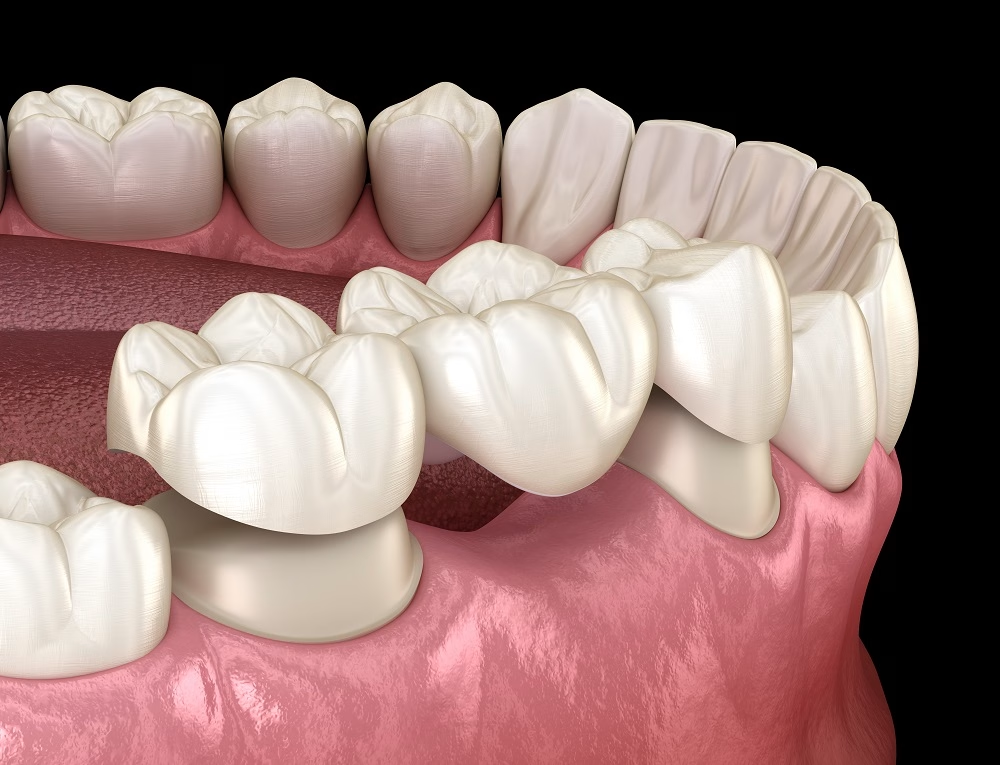
Missing teeth can affect more than your appearance. A gap in your smile can make it harder to chew, speak clearly, maintain your bite, and feel confident in social or professional settings. At Financial District Dentistry, we provide dental bridges in San Francisco to replace missing teeth with natural-looking, functional restorations.
A dental bridge is one of several trusted options for replacing missing teeth. Financial District Dentistry’s current bridge page explains that bridges are designed to help restore your smile when teeth are missing.
Financial District Dentistry
220 Montgomery St. Suite 120
San Francisco, CA 94104
Phone: (415) 399-9999
We serve patients throughout the Financial District, SoMa, Embarcadero, Union Square, Chinatown, Nob Hill, North Beach, Mission Bay, and downtown San Francisco.
What Is a Dental Bridge?
A dental bridge is a fixed restoration used to replace one or more missing teeth. It “bridges” the gap with one or more artificial teeth, often supported by crowns on the neighboring teeth or by dental implants.
MouthHealthy, the American Dental Association’s patient education site, explains that a bridge is sometimes called a fixed partial denture and replaces missing teeth with artificial teeth attached to surrounding teeth for support.
A dental bridge may help:
-
Replace one or more missing teeth
-
Restore chewing ability
-
Improve smile appearance
-
Support clearer speech
-
Help prevent nearby teeth from shifting
-
Maintain bite balance
-
Protect facial and lip support
-
Restore confidence after tooth loss
Cleveland Clinic notes that dental bridges can restore chewing function, enhance appearance, and improve oral health.
Why Replacing a Missing Tooth Matters
A missing tooth may seem like a small problem at first, especially if it is not visible when you smile. However, tooth loss can create long-term changes in your mouth.
Missing teeth may lead to:
| Concern | Why It Matters |
|---|---|
| Shifting teeth | Neighboring teeth may drift into the open space |
| Bite problems | Teeth may no longer meet evenly when chewing |
| Chewing difficulty | Food choices and digestion may be affected |
| Speech changes | Certain sounds may become harder to pronounce |
| Jaw strain | Uneven chewing can place stress on the jaw joints |
| Wear on other teeth | Remaining teeth may take on extra pressure |
| Smile changes | Missing teeth can affect facial support and confidence |
A dental bridge can help restore balance before the missing tooth causes additional oral health concerns.
Types of Dental Bridges
Different patients need different bridge designs. Your dentist will recommend the best option based on the number of missing teeth, the health of neighboring teeth, your bite, bone support, cosmetic goals, and budget.
Traditional Dental Bridge
A traditional bridge uses crowns on the teeth next to the missing tooth space. These supporting teeth are called abutment teeth. The replacement tooth, called a pontic, fills the gap.
This is one of the most common options when healthy teeth are available on both sides of the missing tooth.
Cantilever Dental Bridge
A cantilever bridge is supported by a crown on only one side of the missing tooth space. This option may be considered in select cases, but it is not ideal for every area of the mouth because chewing forces can be higher.
Maryland Dental Bridge
A Maryland bridge, also called a resin-bonded bridge, uses small wings bonded to the backs of nearby teeth. This option may preserve more natural tooth structure, but it may not be as strong as a traditional bridge for heavy chewing areas.
Implant-Supported Bridge
An implant-supported bridge uses dental implants instead of natural teeth for support. This may be recommended when several teeth are missing or when the dentist wants to avoid reshaping healthy neighboring teeth.
Cleveland Clinic notes that a dental bridge can replace a single missing tooth or a row of missing teeth, and that some bridges use crowns on natural teeth while others may be supported by implants.
Dental Bridge vs. Dental Implant
Dental bridges and dental implants can both replace missing teeth. The right choice depends on your oral health, bone support, timeline, budget, cosmetic goals, and whether the neighboring teeth would benefit from crowns.
| Option | Benefits | Considerations |
|---|---|---|
| Dental bridge | Often faster, fixed in place, restores appearance and chewing | May require reshaping nearby teeth if tooth-supported |
| Dental implant | Replaces the tooth root, does not rely on adjacent teeth | Usually requires surgery, healing time, and adequate bone |
| Partial denture | Often lower initial cost, removable | May feel less stable than a fixed bridge or implant |
Cleveland Clinic’s comparison notes that bridges often cost less upfront but may be harder to clean, while implants may last longer and are easier to clean but usually cost more and require surgery.
Who Is a Good Candidate for a Dental Bridge?
You may be a candidate for a dental bridge in San Francisco if you have one or more missing teeth and want a fixed replacement option.
A bridge may be recommended if you:
-
Are missing one tooth or multiple adjacent teeth
-
Want a non-removable tooth replacement
-
Have healthy teeth next to the gap
-
Have teeth next to the gap that already need crowns
-
Want to restore chewing and smile appearance
-
Are not ready for dental implant surgery
-
Need a faster replacement timeline than implant treatment
-
Want to prevent teeth from shifting into the missing space
A dental exam is needed to determine whether your teeth, gums, bite, and bone support are healthy enough for a bridge.
What to Expect During the Dental Bridge Process
1. Consultation and Exam
Your dentist examines your teeth, gums, bite, and missing tooth area. Digital X-rays or scans may be recommended to evaluate tooth roots, bone support, and surrounding structures.
2. Treatment Planning
Your dentist will explain your replacement options, including whether a traditional bridge, implant-supported bridge, implant, or partial denture is best for your situation.
3. Tooth Preparation
For a traditional bridge, the teeth on either side of the gap are shaped so crowns can fit over them. Cleveland Clinic explains that a traditional bridge includes artificial teeth with crowns on either side, and the natural teeth on both sides of the gap are altered before the bridge is bonded.
4. Impressions or Digital Scan
A scan or impression is taken so your custom bridge can be designed to match your teeth, bite, and smile.
5. Temporary Bridge
A temporary bridge may be placed to protect the prepared teeth and maintain appearance while your final bridge is being made.
6. Final Bridge Placement
Your permanent bridge is checked for fit, bite, comfort, and appearance. Once approved, it is bonded or cemented into place.
7. Follow-Up and Maintenance
Your dentist may check the bridge at future visits to make sure it remains stable, comfortable, and healthy.
Does Getting a Dental Bridge Hurt?
The dental bridge process should be comfortable. Local anesthetic is typically used when teeth are prepared, so you should not feel sharp pain during treatment. Mild soreness, gum tenderness, or temperature sensitivity may occur after the appointment, especially while adjusting to a temporary bridge.
Call Financial District Dentistry if discomfort worsens, your bite feels uneven, or your temporary bridge feels loose.
Benefits of a Custom Dental Bridge
A bridge may improve:
-
Chewing comfort
-
Smile appearance
-
Speech clarity
-
Bite support
-
Tooth alignment
-
Confidence
-
Facial support
-
Long-term oral function
A bridge is fixed in place, so it does not need to be removed for cleaning like a removable partial denture. However, it does require special cleaning underneath the replacement tooth.
How to Care for a Dental Bridge
A dental bridge can last for years with good home care and regular dental visits. The supporting teeth and gums must stay healthy because they hold the bridge in place.
Dental bridge care tips:
-
Brush twice daily with fluoride toothpaste.
-
Floss daily around the bridge.
-
Use a floss threader, interdental brush, or water flosser to clean under the pontic.
-
Avoid chewing ice, pens, or hard objects.
-
Wear a night guard if you grind or clench your teeth.
-
Schedule regular cleanings and exams.
-
Call your dentist if the bridge feels loose or your bite changes.
MouthHealthy explains that fixed bridges can only be removed by a dentist, which makes daily cleaning around and under the restoration especially important.
How Long Does a Dental Bridge Last?
The lifespan of a dental bridge depends on oral hygiene, bite force, diet, materials, supporting tooth health, and regular dental care. Cleveland Clinic states that dental bridges typically last at least five to seven years, and with proper care, some can last longer.
A bridge may need repair or replacement if:
-
It feels loose
-
Food frequently traps underneath it
-
The bite feels high or uneven
-
The porcelain chips
-
A supporting tooth develops decay
-
Gum recession exposes margins
-
You have pain when chewing
-
The bridge no longer matches your smile goals
Routine exams help identify bridge problems early.
Dental Bridges and Gum Health
Healthy gums are essential for long-lasting bridge success. Plaque can collect around crown margins and underneath the replacement tooth. If plaque is not removed, it may lead to gum inflammation, decay on supporting teeth, or bad breath.
Your dentist may recommend:
-
Professional cleanings
-
Personalized flossing instructions
-
Periodontal evaluation
-
Fluoride toothpaste or rinse
-
A water flosser
-
More frequent maintenance visits
-
Night guard therapy if grinding is present
Financial District Dentistry also provides preventive and periodontal-related services, making it easier to support your bridge and overall oral health in one office.
Why Choose Financial District Dentistry for Dental Bridges in San Francisco?
Restorative and Cosmetic Dentistry in One Office
Financial District Dentistry provides general, restorative, cosmetic, periodontal, emergency, and technology-supported dental care from its downtown San Francisco location. This is helpful for patients who need a bridge along with cleanings, crowns, implants, gum care, whitening, or smile enhancement.
Convenient Financial District Location
Our office is located at 220 Montgomery St. Suite 120, San Francisco, CA 94104, making care convenient for patients who live or work near Montgomery Street, Embarcadero, SoMa, Union Square, Chinatown, Nob Hill, North Beach, and Mission Bay.
Comfort-Focused Patient Care
Financial District Dentistry’s bridge page emphasizes a welcoming and compassionate team, with a goal for patients to leave with a memorable and enjoyable experience.
Custom Smile Restoration
A dental bridge should restore function while also blending naturally with your smile. Your dentist will consider tooth color, shape, bite, gumline, and facial balance when planning your restoration.
Cost of a Dental Bridge in San Francisco
The cost of a dental bridge in San Francisco depends on:
-
Number of missing teeth
-
Type of bridge
-
Materials used
-
Whether implants are involved
-
Health of supporting teeth
-
Need for extractions, gum treatment, or buildup
-
Insurance benefits
-
Lab and customization needs
Financial District Dentistry accepts most PPO insurance providers and is in network with Delta Dental® and Cigna®. For personalized pricing and benefit questions, call (415) 399-9999.
When to Schedule a Dental Bridge Consultation
Schedule a visit if you:
-
Are missing one or more teeth
-
Have difficulty chewing
-
Feel embarrassed by a gap in your smile
-
Have a loose or failing bridge
-
Want to compare bridges and implants
-
Recently had a tooth extracted
-
Have shifting teeth near a missing tooth space
-
Want a fixed alternative to a removable partial denture
The sooner a missing tooth is replaced, the easier it may be to protect your bite and remaining teeth.
Schedule a Dental Bridge Consultation in San Francisco
If you are missing teeth or want to replace an old bridge, Financial District Dentistry can help you understand your options and restore your smile with a personalized treatment plan.
Call (415) 399-9999 or request an appointment today.
Financial District Dentistry
220 Montgomery St. Suite 120
San Francisco, CA 94104
Monday–Thursday: 7:30 a.m.–5:00 p.m.
Friday–Sunday: Closed
Frequently Asked Questions
What is a dental bridge?
A dental bridge is a fixed restoration that replaces one or more missing teeth. It uses artificial teeth to bridge the gap and may be supported by crowns on neighboring teeth or by dental implants.
How many teeth can a dental bridge replace?
A bridge can replace one missing tooth or several adjacent missing teeth. The number depends on the location, bite force, support teeth, gum health, and whether implants are used.
Is a dental bridge removable?
A fixed dental bridge is not removable by the patient. It is cemented or bonded in place and can only be removed by a dentist.
Is a bridge better than an implant?
Neither option is best for everyone. A bridge may be faster and cost less upfront, while an implant may be easier to clean and may last longer in many cases. Your dentist can compare both options based on your oral health and goals.
How long does a dental bridge last?
Dental bridges often last at least five to seven years, and some last longer with good oral hygiene, regular dental care, and healthy supporting teeth.
Does getting a dental bridge hurt?
The procedure is usually comfortable with local anesthetic when tooth preparation is needed. Some temporary soreness or sensitivity can occur afterward.
How do I clean under a dental bridge?
Use a floss threader, interdental brush, or water flosser to clean underneath the replacement tooth. Your dental team can show you the best method for your bridge design.
Where can I get a dental bridge in downtown San Francisco?
Financial District Dentistry provides dental bridges at 220 Montgomery St. Suite 120, San Francisco, CA 94104. Call (415) 399-9999 to schedule an appointment.